Showing posts with label education. Show all posts

Tuesday, February 28, 2012

Does Saudi-Arabia Need Sex Education?

A while ago I wrote about Saudi men and the cultural pressure society brings on them to perform in the bedroom. Check it out here: http://blueabaya.blogspot.com/2011/09/saudi-men-and-pressure-to-perform.html

In the article you can read how some young Saudi men are not able to consummate their marriages due to performance anxiety. A study of newly married Saudi couples found the prevalence of so called "Honeymoon impotence" to be as high as 17%. The same study concluded that 63% of marriages were not consummated because of the severe anxiety of the woman leading to a condition called vaginismus. Other reasons were erectile dysfunction, not knowing coital technique and low sexual desire.
One of the underlying factors to the problem is lack of sex education for young girls and boys.
Most of these cases of unconsummated marriages could have been prevented if they had been educated and aware of their bodies and its functions.

There is an alarmingly high rate of divorces among newlyweds in the Kingdom. Most divorces occur within the first year of marriage. Unconsummated marriage is one of the top reasons for young couples to seek divorce. Proper sex education could significantly help to lower the divorce rate.

Because of the lack of sex education in Saudi-Arabia the young are left to find out for themselves. This can naturally result in some horribly wrong ideas and lead to unrealistic expectations and create extreme anxiety and fears. Girls and boys won't learn from their parents either since everything sexual is viewed as "a'eib" (forbidden and shameful). The best sources for the girls are other peers at school and the maids! Now how much do the uneducated maids really know and how much are superstitions coming from their cultures?

Why is there no sex ed in Saudi? Does Islam forbid talking about sex?
No. But like many things in Saudi, true Islamic teachings and what is actually happening around here are two completely different things. Islam does not frown upon talking about sex and educating young people. Sexual relations between married couples are seen as normal part of life and nothing to be ashamed about. However the strong influence some sheikhs have on public opinion is one reason why Saudis cringe at the idea of their kids having sex education. All talk about sex is a taboo.

The message sent by some religious fanatics is that sex ed is bad and causes harm. These people think young men and especially women might get some perverted ideas in their heads if they are taught about sex. If you teach them about anatomy of the opposite sex and show how it's "done" they will become sex crazed and go and have premarital relations. Some even say showing pics of male and female sexual organs is a form of western conspiracy. Or that talking about sex will make women promiscuous. Sometimes I wonder what sort of dirty minds come up with this anyways?


You would think that in this day and age the internet would provide at least some sort of info on the subject. The problem of self educating about marital relations is that many of the sites remain censored from Saudi and there is just all sorts of wrong information available. Also internet time for the youth (especially the girls!) will be restricted or they are not allowed to use the internet at all. This leads to young couples getting married without having a clue of basic anatomy of the other half and no knowledge of how babies are made.

So I will conclude by telling you a real life example of how badly sex education is needed here.
A newly married couple came to the infertility clinic for check up. They had been trying for over a year to conceive without any luck. The doctors ran some tests and everything came back normal. The couple was sent back home to keep trying and praying for a child.
Another year went by and the couple started to get very frustrated and came back to the clinic. As the doctor discussed their options he thought of asking a few questions of their "technique" to rule out any issues there.

The man explained how they had marital relations always in the same position and how it was usually very painful for the wife. The doctor started to suspect there really was something wrong with their technique and showed them a picture of the anatomy of female sexual organs asking the husband to show which area they used during intercourse. He very shyly pointed to the "back door".

Problem solved. The couple conceived shortly after the quick sex ed by the doctor.

So if this Saudi man was not able to locate the correct passage for two years then I can't imagine what else is out there?

So what do you think? Would Saudi-Arabia benefit from sex ed?

Tuesday, January 31, 2012

10 Ways To Stop The Madness

Previously I wrote about the lack of green values in Saudi-Arabia you can read the post here: http://blueabaya.blogspot.com/2012/01/recycling-saudi-values.html

I promised to post some tips on how to make your life in Saudi more environmentally friendly. Here are 10 easy and simple ways everyone in Saudi Arabia can recycle and save the nature. Saudi-Arabia has some beautiful and unique nature and by even the smallest changes we can make a difference in preserving the environment! It might feel like just a drop in the ocean, but when hundreds or even thousands of people make that one small change it becomes a wave of change! 
Sometimes we go about our daily lives without giving things much thought and just continue doing stuff the way we're used to. When we look closer and think about it, a lot of things we do are just madness!

It's time to start thinking and acting to stop the madness!


1. Reduce usage of plastic bags
The single most efficient thing everyone in the Kingdom can do is cut down how many plastic bags they take home from the store. People like to have their groceries and purchases placed separately in a GAZILLION plastic bags instead of placing everything in one or two large bags. WHY?? This is madness!

Do you really need all those 10 plastic bags to carry the 11 items you bought? In fact did you know you can fit 11 items into ONE bag with no trouble at all :)

The problem is baggers in Saudi grocery stores will by default place only one or two items per bag. This can easily add up to 40-60 plastic bags per average family per grocery shop visit.
Say the family grocery shops once a week plus all the additional visits to get few things, adding 20 or so more bags to the total of approximately 80 bags a week. 400 bags a month, 4800 bags a year. Multiply that by how many Saudi and expat families there are who are doing this..MILLIONS of plastic bags wasted! For nothing! And those very same plastic bags end up in the streets, in the desert, on the beaches, in the sea.
The baggers do it simply because they have been taught not to place for example a deodorant, a bread loaf, cheese or a milk bottle in the same bag. WHY?? This is madness!

My advice is: Next time advise the bagger to place as many items as possible in one bag. Tell him you don't mind, you will not get upset with him. Remember to explain why you are requesting this and most importantly, if he does a good job give him an extra riyal or two and thank him profusely. Sometimes despite the advice baggers don't either understand or want to listen. That is when you can help him pack the items and show him what you want.
Some grocery stores like Carrefour sell large fabric bags you can use for your grocery shopping. Most baggers will not know how to "use" them and might even place the items first in tons of plastic bags, then place inside the fabric bag. Again, you might need to show them how you want it done.

At home re-use the plastic bags, use them as garbage bags and for storage. For more tips check this list of 99 ways to reuse plastic bags: http://tlc.howstuffworks.com/home/reuses-plastic-bags2.htm

2.  Recycle water bottles
Most people in Saudi drink bottled water. Some prefer to always purchase hoards of small bottles. WHY?? This is madness!

Buy the large recyclable water bottles from companies like Nestle that offer home delivery and save money and the nature and your back! You can place an order online here: http://www.nestle-family.com/pure-life/english/
If you must use smaller water bottles sometimes, refill them and use a few times before throwing them away.

3. Use water sparingly
Many Saudi families will have more than one car. It's usually the driver's duty to wash the cars, and the maids are the ones who clean the outside areas from dust. And how do they do it? By spraying hundreds of gallons of running water from the hose all over the yard! WHY?? This is madness!

Don't have your car washed with running water from the hose. Ask the driver or whoever is cleaning the car to use a bucket and cloth instead. Ask the maid to SWEEP the yard once in a while instead of pouring hundreds of liters of water around. Don't run the water the whole time while showering or brushing teeth and avoid taking excessive baths.

4. Reuse or return hangers from laundry places 
Most Saudi families take their thobes, abaya and ghutra to be professionally cleaned. Every neighborhood has a laundry place or two. When they are picked up the clothes will be each placed separately on hangers and inside plastic bags. And what do most people do? Throw them away! WHY?? This is madness!

Don't throw these hangers away! If you don't want to reuse them RETURN them to the cleaners! Also, request to have multiple thobes placed inside one bag, no need for ten separate plastic wrappings.


5. Turn off lights, air-conditioning and unplug appliances when not home.
I've noticed many people leave all their air-conditioning and all the lights on when they leave the house for longer periods of time. WHY?? This is madness!

Teach yourself and your kids a new habit of switching them off every time you leave and you will save a lot of money on your electricity bill too. When going on vacation, switch off your appliances too.

6. Use phone charge cards wisely
Many people use prepaid mobile numbers and charge their phones with plastic phone cards. These cards come in various amounts, ranging from 10 SAR to 100SAR. They are all covered in a plastic sheath. A fellow blogger Veeds of Arabia conducted an experiment of collecting all of the plastic cards he could find on the ground for few days. He found that "Essentially 10 and 20 SR cards comprised 87% of the pre-paid cards left on the ground. http://jveeds.blogspot.com/2010/12/its-all-in-cards.html
WHY?? This is madness!


The best way to charge your prepaid phone is by asking the supermarket vendor for a receipt with the charge number on it instead. If using the plastic cards, use as high amount as possible to avoid wasting excessive plastic. And please, throw the card in the trash when you're done!

7. Cut back on use of tissues.
Saudis don't usually use toilet paper (they use water from showers) but boy do they know how to waste tissues! I have never seen so many different tissue brands in my life! I only knew Kleenex brand before I entered the tissue wonderland. Tissues even come scented ones and there are specific ornamental tissue boxes to place tissues in! Saudis use tissue (mandeel) for basically anything everything! They can be found in every single room of the house and even in their cars. WHY?? This is madness!

This pointless extravagance is just mind-boggling to me as a Scandinavian used to environmental thinking and using paper towels sparingly. Cutting back on tissues is not that hard. First think do you REALLY need to use them so much? Try using water and towels for a change, wipe or dry surfaces with washable kitchen cloths. And for the love of God, don't get scented tissues, those are the most environmentally destructive ones that you can get!


8. Avoid Styrofoam packaging
Many people like go for take-away foods once in a while. These places often use Styrofoam packaging which are extremely harmful to the environment and also for your health. Did you know that these packages and cups will still be sitting in the nature after 500 years without decomposing? Again the same mentality of placing one item in one container prevails. WHY?? This is madness!

It's perfectly fine to place the burger, the fries and the salad in the same container!
Request to have everything packed in the same or preferably in a carton container.
Also, grocery stores often pack fruits, cheeses, pastries etc. in styrofoam. Ask to have them just wrapped in plastic which is really all you need!

9. Buy local produce avoid imported goods.
There is plenty of good quality local produce available, yet many families always go for the imported, American stuff, just because it American. People will pay 50 dollars for imported ice cream WHY?? This is madness!

Always try to favor locally produced goods, organic produce, whether it be bread, fruits, ice cream or meat you are buying! Imported goods are often overpriced, have gotten damaged or ruined in the shipping process or have bad expiration dates.

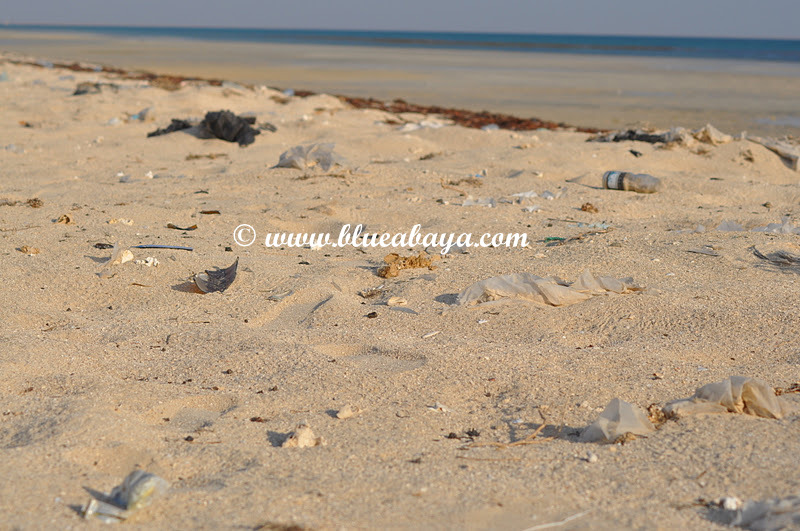
10. Don't throw trash on the streets, beaches, oceans or deserts!!
Well this is self clear for most people living in western countries, but in Saudi it is the NORM to carelessly throw waste around. The attitude is "someone else will pick it up for me" or "I'm not a maid/ street cleaner". Indeed, there are yellow-clad street cleaners around every corner cleaning up after the Saudis. They work for a mere 300SAR (60euro) a month in slave-like conditions but it seems they cannot keep up with all the trash lying around.
Beautiful beaches around Jeddah, Farasan Islands and Gizan for example have been RUINED with litter.
WHY?? THIS IS MADNESS!!

Spread the message! Please share this post with your friends and help STOP the madness.

Thank you,

Thursday, November 18, 2010

Expats in Saudi-Arabia and Learning Arabic

Many western expats come to the Kingdom for employment not knowing a word of Arabic and that is unfortunately also how they end up leaving. I could strongly recommend expats planning to come to work in Saudi-Arabia to try learning some basic Arabic even prior to arrival. Once here I would recommend attending the courses provided by employers or independent companies and language institutes. If the expat is motivated enough, it's possible to pick up a lot on your own too. I learned my Arabic skills mostly on my own from patients and co-workers and then later went to the classes and learned to read and write Arabic.

Learning the native language of the country one chooses to work in is an act of respect toward that culture and its people. Needless to say it will greatly improve the working experience and time spent in the country. When locals see a foreigner who has gone through the trouble of learning some of their language it creates a positive atmosphere for interaction with them. Many Saudis actually don't understand or speak conversational English and some don't know any words at all. Even some of the middle class and higher class families I've noticed that their English skills are just not good enough to hold even a simple a conversation. For healthcare workers in particular I find language skills would be essential to create a trusting relationship with the patients.

For me personally learning Arabic has made a huge difference in patient care settings and I've found it greatly rewarding. Patients are always showing their gratitude and respect of the foreign nurse being able to explain procedures and ask questions in their own language. It builds trust and mutual respect.

I've noticed that for some reason learning Arabic is the last thing some expats want to do.They would rather spend time within their own circles and are not interested in the local culture at all. In my opinion they are also in a way being disrespectful toward the locals. It's like seeing ones own culture as superior to others.

On the other hand take a look at the exemplary Asian nurses. They will all without exception be willing to learn Arabic and soon have basic language skills to communicate with their patients. Many times western nurses rely on the Asian colleagues to come translate and explain things. Amazingly Asians don't even necessarily go to language courses-they learn on their own and pick up Arabic really quickly.

Why is it that for westerners it seems to be such a huge step to take? Do they have a really bad attitude towards the language itself, or is it the culture as a whole, I wonder? I have heard all kinds of excuses over the years, all of which in my opinion are just that, excuses!
Here are some of the most common reasons people give for NOT wanting to learn Arabic, and my encouragement to learn ARABIC!

"Why should I learn a language I won't need anywhere else?"

You never know if you will face a situation you could make use of your skills! Learning a new language is always good brain exercise, it actually improves the memory and performance of the brain. It feels rewarding and satisfying to learn something new and to succeed.

"I am only coming for a year I don't need to learn Arabic"

More often than not people plan on coming to Saudi-Arabia for one year and then end up staying many. And in any case why not make that one year more tolerable, rewarding and make easier on yourself? Make the most of that one year! There are many quick crash course you can take and they don't take up much of your time but you will benefit hugely form your new skills.

"I can communicate well enough with body language"

Body language in fact varies a lot from one culture to another and can confuse more than explain things. This also frustrates patients and colleagues a lot.

"I don't want to learn their stupid language it sounds funny/vulgar/disgusting/ridiculous"

To this quite arrogant approach one could say, do you think your own language sounds less funny to others? I know Finnish language doesn't sound pretty to many but so what? Arabic language has some unique syllables which can be hard for foreigners to pronounce, but that is the richness in the language.

"This is supposed to be an English-only workplace"

English is supposed to be the language that co-workers use between each other in many work places including the hospitals but dealing with clients/patients is where Arabic becomes essential. Despite the English only rule, many Arab co-workers will still be conversing in Arabic.

"Upon recruitment I was informed I am not required to know or learn any Arabic in my work"

Recruitment often does this "mistake" to make it sound easy to come to work in the ME, they just want to recruit you! I believe this is one of the reasons behind bad attitudes of nurses coming from western countries. But upon realizing how the situation is in reality one can always make the required adjustments and learn Arabic!

"I can use a translator"

Translators are rarely available and they are often not even qualified as translators. A translator can basically be any Saudi that speaks even a few words broken English and therefore there's a risk of the message being distorted by the interpretation of the translator.

"I could be willing to learn some words but I don't want to take the course because you have to learn the Arabic letters."

Learning the Arabic alphabet is very important for correct pronunciation of the words. It is virtually impossible to teach the language without learning the alphabet because there are no equivalents in the English alphabet.For example there are five different T's in Arabic language. Incorrect pronunciation can lead to mistakes like calling a cardiologist a dog doctor!

To make the best out of your stay in Saudi-Arabia, take the effort to learn some Arabic. This will greatly help you in your everyday activities and communication. You will also improve your chances of getting to know and communicate with more Saudis!