Showing posts with label travels. Show all posts

Monday, May 20, 2013

Ushaiger Heritage Village

My Article on Destination Riyadh May 2013 Travel Issue: Ushaiger Village

Ushaiger village is located approximately 180km NW out of Riyadh and is one of the oldest mud villages in the Najd region. What makes Ushaiger special is the fact that some of the local families treasured their heritage so much they decided to renovate some buildings and parts of the town back to its old glory. And all this from their own pockets! Ushaiger, which means “the little blonde”, was named after the red mountain that stands next to it.  The first inhabitants settled here around 1500 years ago and the village served as a common stopping point for pilgrims going for Hajj.


Visiting Ushaiger is well worth the approximately one and a half hour drive from Riyadh. The entire day can easily surpass by wandering around the narrow streets and seemingly endless alleyways.  In addition to the myriad of different types of mud houses, the village has two schools, a marketplace, a museum, a heritage house and many picturesque mosques, some of which are still in use.

Ushaiger is surrounded by an oasis and ancient farmlands which the inhabitants utilized by creating a complex irrigation and water collection system. The aim was to preserve and distribute the precious water derived from one of the many interconnected wells around the village.
The people of Ushaiger are known to be very friendly and here you can experience the famous Saudi hospitality at its best. The locals can regularly be seen sitting on benches chatting and reading newspapers. The villagers are always willing to help visitors and show them around their much adored little town. Visitors will often be invited into one of the renovated mud houses for Arabic coffee and dates or if you’re lucky and they have time, guests are welcomed to join in on the family dinner.


The interiors of these mud and straw houses are astonishing in detail and architecture; here one truly gets the feel of stepping back in time.  Natural light enters the houses from the open air roofs and the many triangular windows distinctive to the Najdi style. Antique lanterns and traditional fireplaces further create a mysterious atmosphere inside the humble homes of the Ushaiger people.


Take time to browse the museum which the villagers have set up from various artifacts and old relics collected from the inhabitants. The museum keepers will be more than happy to guide you around and explain in detail the history of each item. They have a superb collection of traditional clothing including old abayas which are surprisingly colorful and intricate in detail.


There’s a small outdoor restaurant near the entrance overlooking the palm tree oasis which makes for a nice ending to the day. It’s recommended to drive up the nearby mountain for magnificent views down to the village.
Ushaiger village is peaceful, beautiful and serene and makes for a humbling and enlightening experience.


Wednesday, May 8, 2013

Top Ten Things To Do In And Around Abha

My article on Destination Riyadh's May travel issue:
Top 10 Things To Do In Abha And Around

Abha region is a very popular holiday destination in the summer due its beautiful scenery, the famous misty mountain tops and cooling breezes.  Tourists from all over the GCC flock here to escape the sweltering summer heat. At an elevation of 2200m above the Red Sea, the area enjoys pleasant weather year round.  Asir region has plenty of activities to do and it might be a challenge to decide between all of the activities. Here are my top ten to do list from Abha and around in no particular order:
1.  Visit the New Abha resort and The Abha Lake Dam. Stroll around the lakeside in the 300,000sqm garden and dine at the luxurious Abha Palace Hotel with fantastic views of the lake and the city. You can take a scenic cable car ride from the resort to the Green Mountain.
2. Take a thrilling cable car ride down to Habala, the Hanging Village. This ancient village was built halfway down a cliff face and it used to be only accessible by ropes. It’s believed that the villagers fled the Ottomans here and lived in isolation completely self sufficiently until they were rediscovered by a Saudi army helicopter. The site is a unique piece of Saudi history but unfortunately it has become quite commercialized in the last few years but it’s still worth the visit.
3.Drive up to the Green Mountain in the middle of Abha city. The “mountain” is actually a hill overlooking the city which is beautifully lit with green lights in the night. There’s a restaurant and cafĂ© on the top with a nice outdoor terrace enjoying amazing views of Abha. Try the mint tea and sheesha while enjoying the sunset and the cool breezes on the terrace. On the way up be sure to stop at the excellent souvenir shop. There’s also a small restaurant decorated like a traditional Asiri mud house in the basement of the shop.


4. Take a bird watching or tour with the Asir Tourism Board to the various parks inside Asir National Park such as Al Qara'a, Al Souda, Al Wardeh, Dalafan, Al Jarrah, and Al Hassab.  Wander around the juniper forests and spot some of the 170 bird species that make this region their home.


  5. Take in the jaw dropping scenery in Soudah and marvel at the highest mountains in Saudi Arabia including the tallest peak, Jebel Soudah rising to 2910m. The mountains are famous for the mist covering the mountain tops which makes the atmosphere almost mystical. It’s always cool and serene up here.  Enjoy a picnic in full privacy with only the wildlife to interrupt the silence.


 6. Take the Al Soudah cable car ride down to Rijal Al Ma’a mud brick village. Visit the museum and library and the traditional food restaurant or just take a stroll in the beautiful valley.

 7. Try some extreme sports in an extremely beautiful environment. Paraglide or mountain bike down the Soudah mountains. A French group organizes these in the summer months in addition to rock climbing near Habala.


   8.  Discover Asir regions traditional architecture by visiting the Shada Palace, Al Milfa Palace and the old mud houses dotted around Abha. Visit the Al Miftaha village turned museum to see how people lived back in the day.
9.  Meet the famous Arabian Baboons that can be spotted beside most of the mountain roads. There’s a population of them near the Soudah cable car ride scavenging food from tourists. Be mindful of children with food in their hands, the baboons might attempt to grab it!

  10.  Explore the legendary Asiri souqs that have been named after the days they've been held on for centuries; Abha’s Tuesday market (Souq Al Thulatha) and its sister city Khamis Mushayt’s Thursday Market ( Souq al Khamis). The Tuesday market has a separate women’s souq run by all female vendors and the Thursday Market boasts some of the best gold and silver Bedouin jewelry in the region. Other finds are white or gold honey, colorful straw baskets and hats, traditional embroidered women’s dresses, Jambiyah (daggers), frankincense and ‘shab’ a white powder used by locals as a natural deodorant and antiseptic.


Tuesday, February 19, 2013

Riyadh's Hidden Gems-The Diplomatic Quarter Gardens

Riyadh's expatriates are always looking for new and exciting things to do on weekends.  There are many places in and around Riyadh which are mostly unknown to the public and expats. One of them is the Diplomatic Quarter parks, the most relaxing and serene places within the city limits. Clean, green surroundings, open spaces to walk freely in and let the children play outdoors are a rarity in the desert Kingdom. All this can be found in the Diplomatic Quarters, just a five minute drive from the Riyadh city center.

Here's my article on the DQ parks including directions how to find one of the most beautiful and scenic ones with plenty of activities for the little ones to enjoy as well.  This article was published in the Women's Skills Bureau February Newsletter:
Riyadh’s hidden gems-the Diplomatic Quarter gardens

The Diplomatic Quarters hosts some of the most beautiful, green landscape and fascinating architecture in Riyadh. The Diplomatic Quarters was built on the edge of Wadi Hanifa in the 1970’s as living quarters for diplomats and the embassy area. Today the “DQ” is like a Green Eden midst the harsh surrounding desert, its parks like a refuge from the pollution and noise of bustling Riyadh.


What many if not most expats miss from our home countries is being able to walk, those free open spaces and green scenery. All of these can be found in the Diplomatic Quarters gardens. The entire DQ is an abaya free zone and resident expats can often be seen in regular clothing here. Unlike the rest of Riyadh public parks, the DQ parks are well maintained and trash-free.


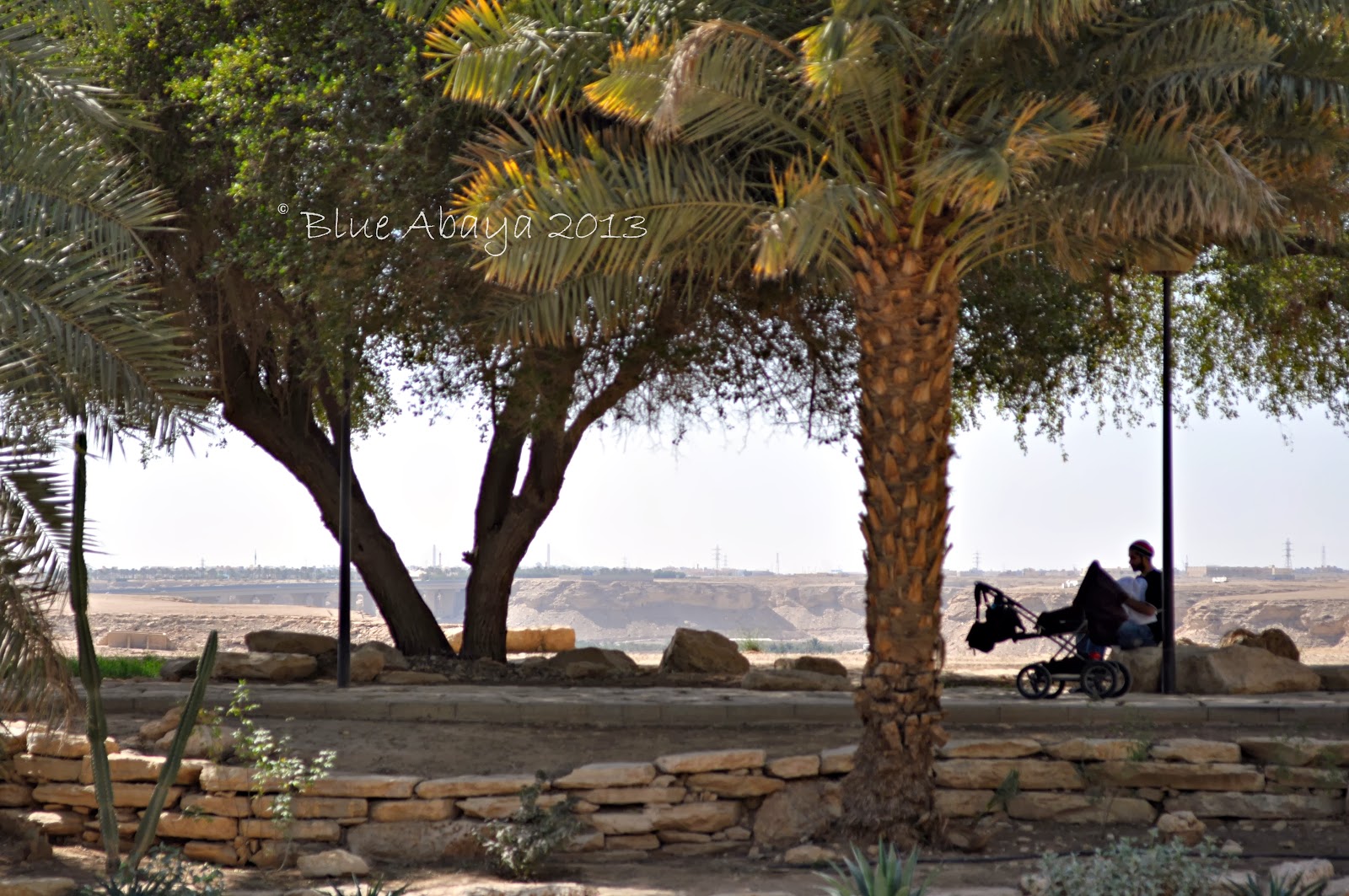
There are over 30 parks, deemed gardens in the DQ, scattered over the different residential areas and along the walking track. The track is about 20 km long and runs around the entire perimeter of the DQ. Views from the walking trail down to the Wadi Hanifa valley and its hundreds of date palm trees are spectacular. The edge of the wadi itself resembles a canyon, creating a stark contrast with the sea of palm trees below. In the distance, the palaces and mosques of old Diriyah can be seen.  All that can be heard is the song of birds and the sound of a cooling breeze from the wadi.


The gardens were designed by a group of international landscape architects, their aim to preserve the natural environment using only native plants and natural materials. The seeds for the plants were gathered in the deserts and then planted in the gardens and all around the DQ area. The idea was to create a sustainable environment keeping in mind the natural flow of water and the existing formations in the landscape.

All of the plants that have been used in the DQ parks are endemic to the Arabian peninsula. Juniper, Acacia trees, Aloe Vera, Jasmine, Fig trees, Jujube trees, Prickly Pear cactus, and many others. The gardens have different flowers in bloom year round.


The gardens have been designed to have something for everyone. There are tranquil and serene areas for a more peaceful experience as well as children’s playgrounds, football fields, basketball courts and skating rinks to please the more active visitors.


There are grass fields, fountains, picnic areas, pavilions, courtyards, benches, shaded walkways, private seating areas, beautiful fragrant flowers and interesting rock formations for the visitors to enjoy. Each park has a distinct theme in design and vegetation which makes discovering new parks interesting and rewarding.

What makes the parks even more relaxing is the presence of water. The countless fountains, water channels and waterfalls create a constant calming sound of running water. This is like music to the ears for Riyadh’s desert dwellers.  Every park has at least one fountain and the larger ones have sections of the park completely dedicated to different kinds of fountains.

For families with children these gardens make for an enjoyable day out. Children of all ages will enjoy the playgrounds which have everything from swings, slides and suspension bridges to imaginative climbing gyms. The grass fields are perfect for running around and picnics. The largest parks have mosques adjacent to them and all parks have toilet facilities.

The best time to visit the gardens is in the mornings or late afternoons when lots of children come to the playgrounds. They’re open all day and everyday of the week and open to everyone, free of charge. The easiest way to pass the DQ security is to say you’re visiting your embassy during working hours and on evenings the sports club or ladies spa there.
Here are directions to the “Al Aarudh” garden, one of the largest in the Diplomatic Quarters with three different playground areas, two fountain areas, a grass field and mosque. Enter DQ from the North gate (access from Mecca rd.) immediately after entering you will see roundabout number 1. Go around it so that you take a left (the third exit) and continue on this street which goes into Hajar residential area. Drive on this street past the Indian and Guinean embassies on your right until you see the walls of the garden and shortly after the entrance to the park also on the right hand side. Park your car anywhere on the street.


WSB Newsletter can be downloaded from here:
http://library.constantcontact.com/download/get/file/1107647512759-41/WSBNewsletterFinal-Feb2013.pdf