Thursday, August 22, 2013

Sinta, The Indonesian Prisoner-Housemaid, Part One

When I first met Sinta, an Indonesian housemaid turned into a prisoner of a hospital room, her entire being had an effect on me that I'll never forget. Sinta's sincerity was so genuine it made her appear almost child-like in her trust of others. The kindness of her heart shone through the lovely but shy smile on her face. A smile that would light up the whole room and bring a special kind of glow to it. Sinta was one of the most approachable and accepting people I've ever met. She would make everyone feel at ease from the minute they'd meet.

This is the first part out of three of her story which I think is too long and too much to digest in one post.

Sinta's story of how she ended up living with "Mama Ameenah" in that tiny and murky hospital room was told to me by the Malaysian nurses on the ward. They and Sinta had become friends because they understood each others languages. Sinta spoke some Arabic too, but she was not fluent, nor was I when I first arrived in the Kingdom to work on a surgical ward.

Sinta had been in her late 20’s when she left to Saudi-Arabia’s capital Riyadh to work as a housemaid in a large Saudi household. She was from a tiny impoverished village, had no education and could barely read and write. She knew Arabic mostly from memorizing some Quran.

Sinta had a teenage daughter and a 9-year old son together with her husband, who by profession was a mechanic, but unable to find a job or support the family. They lived in severe poverty and something had to be done. It was Sinta who had decided she would go to the Saudi Kingdom to try and earn a living for the rest of her family as a housemaid. She'd heard it was good money, enough to send both her children to school, feed and clothe the kids, her husband and her own mother who lived with them in their small and humble house. Sinta had dreams. She wanted to ensure her daughter would be able to study and have a better life than she did and that her son would one day become a doctor. She was ready to sacrifice everything for their well-being.

Sinta's new family was a typical upper middle class Saudi family living in a large villa in Riyadh's suburbs with many family members under the same roof. Sinta’s main duty besides cleaning and cooking was to assist with the elderly mother who she affectionately called “Mama”. Her Mama was the sweetest woman and always treated Sinta with kindness and generosity. The rest of the family however did not share the same affectionate approach.

One of the sons with his family and a 40-year old spinster daughter lived in the same villa. When Sinta’s work with the Mama was done, the Mama's children took care that she didn’t get a moments rest in the day. Especially the daughter, who spent all her days sleeping in, shopping and gossiping until late at night, would take advantage of Sinta's kindness and hardworking attitude forcing Sinta to work until late at night serving her.
Sinta's duties would never end but she did not complain. She just said alhamdulillah (Thank God) for what I have! A big and house to live in, food to eat, a soft bed to sleep in and money to send home.

During the six years Sinta had worked in the household, the son, who was also her sponsor, had never allowed her to go for vacation to meet her family. Her passport had been taken away on arrival. Sinta had been out of the villa on a few occasions to go to the store with her Mama. She'd been given a mobile phone but was hardly ever able to use it because she had to charge it from her salary of 600 SAR a month. Despite her difficult situation and unfair treatment she remained grateful and hopeful, believing her employer's empty promises "soon you will get to go on vacation, just a few more months!".

Sinta never had a day off, she was made to work by the spinster daughter on Friday’s too. She laughed when she told me of the one and only time she'd been given the day off. Sinta had been sent to the son's second wife's villa 'to unwind'. In reality, she was made to clean there all day. But her Mama’s kindness and their friendship kept Sinta hopeful and patient that one day all her hard work would be rewarded.

Then one day her life changed forever. Sinta's Mama had been ill for a while, complaining of abdominal symptoms. She'd been accompanying the mother to various doctors appointments and procedures to try find out what was the problem. The doctors had finally decided to schedule a gastroscopy for her after the relatives had pushed and insisted upon it for months.

When the day of the procedure came, the Mama had been leaving to the hospital without Sinta which left her heart-broken from worry. She was due to return in the evening. Before the Mama left the house she had asked Sinta to prepare all her favorite foods, as she would be so hungry from the three days fast she was put on prior to the gastroscopy. She promised Sinta they would have a big party when she came back. Sinta had been very pleased and went in the kitchen to prepare.

In the afternoon the family was alerted from the hospital, their mother had been rushed to the ICU because of complications during the procedure. Her heart had stopped. She was now unconscious and connected to machines, the doctors were unsure if she'd ever wake up.

Sinta rushed to the hospital together with the rest of the family. Sinta was so shocked and terrified of the sight of her Mama, lying lifeless in a maze of tubes and loud machines she'd never even imagined could exist that she had fainted on the spot. In the meanwhile the sons had been extremely angry at the hospital staff asking how this could have happened, demanding to know the reason that lead to her state.

The doctors told the family she was brain-dead and paralyzed. Because of an allergic reaction during the procedure, the mother had had a major seizure which they were not able to control and it eventually lead to her heart stopping. They managed to revive her but she didn't gain consciousness.

The sons were outraged when they learned that their mother had been given a drug she was allergic to. Their mother's severe allergy to this particular drug was well known by everyone in the family and had been documented and labeled everywhere on her file and electronic patient records. Despite all these precautions the staff had administered the drug intravenously (into the bloodstream) with the devastating consequences.

The family was understandably horrified, devastated and outraged, after all this was supposedly the Middle-East's leading hospital, full of international expertise and the latest state of the art equipment. How could this have happened?! The family launched complaints, filed a medical error report against the hospital and they appealed their case with the Emir, after being rejected by the Ministry. They demanded financial compensation and for their mother to be taken care of in the same hospital for the rest of her life. The mother would require expensive medical equipment and around the clock medical care because of her state. All this was of course very expensive and required a medical professional's supervision.

Perhaps from their anger, the family could not think clearly what was best for their mother. Having her stay long-term in a hospital setting would expose her to multiple risks, some even life-threatening ones such as multiple drug resistant bacteria. Her care on the ward would cost hundreds of thousands of riyals daily. They wanted the hospital to pay for their disastrous mistake.

Eventually the administration of the hospital had to bend to the family's demand to admit their mother to a ward on the hospital permanently because of the cardinal error the hospital had made. Sinta was assigned to be their mother's private sitter, never leaving her side or the hospital. Sinta ate, slept, prayed and showered in the room over four years. She hardly came out of the small dark room and never left the ward. It would become like a prison cell to her.

"Mama Ameenah" lay in her bed motionless, with the same expression on her face. Her eyes were often open and at times it seemed as if she heard and understood the conversation, but there was never confirmation that it was true. Sinta didn't give up trying though. Sinta kept talking to her, relating to the daily events and played Quran tapes from her little recorder next to the bed. Since the hospital didn't provide any kind of rehabilitative care, this was the only stimulation the patient ever got.

Sinta took care of the Mama as if she were her own mother. I was amazed by how her spirit had not been broken despite her fate. I found her positive attitude and thankfulness remarkable. As I watched Sinta hold the Mama's hand, softly talking to her, I realized how this was something really special in a world full of cold and selfish people.

Part Two: My friendship with Sinta, planning for the future and her escape

Part Three: The world as Sinta knows it ends, Sinta's disappearance


Saturday, August 17, 2013

Jihad, Fundamentalist Islam, and the West

Dear Blue Abaya readers, the following is a guest post written by Alex Bint Eisa. I recommend her article especially for the non-Muslim readers to learn a thing or two about Jihad that you might not have known before.
If you think you've got what it takes to write for Blue Abaya, your writing is factual, beneficial to the readers and as a bonus spiced with a dash of humor, feel free to contact me and send your article through for evaluation. The article MUST be related to Saudi Arabia, and/or Islam, ME, or fall within the interests of Blue Abaya. Contact me at blueabaya at gmail.com.

"Jihad, Fundamentalist Islam, and the West"

Much in the same way that radicals have hijacked the public persona of Islam throughout the West, Western media has failed to maintain objectivity in its portrayal of Islam. The interpretation of the term 'Jihad' in contemporary Islam is one of the most common misconceptions, as well as points of debate, inside and outside the Arab world.


The different types of Jihad, its interpretations and the role it plays in the contemporary understanding of Islam are subjects of constant debate in the post- 9/11 globalized world. Even more so after the fundamentalist Islamic groups skyrocketed to international stardom. Jihad is the daily struggle to do what is halal and to avoid what is haraam. The Jihads in Afghanistan, Palestine, Iraq, Chechnya, and Kashmir have provided a vivid and uniting consciousness for Muslims around the world.


When translated literally from Arabic, Jihad means effort or struggle.


What exactly Muslims are struggling against, however, depends on the type of Jihad one is referring to.  There are technically four types Jihad: of the heart, the tongue, the hand, and the sword.


Jihad is often more simply categorized as either greater or lesser, although there is some debate as to whether or not war/armed battle constitutes the lesser Jihad according to the Prophet’s teachings.


Greater Jihad, Jihad of the heart, is the daily struggle against ones evil desires, which the devil uses in order to tempt man.  Jihad of the tongue is the struggle to proselytize the word of God (Allah) to those who do not know it and bring to them knowledge of the one true faith, Islam.  Directly related to Jihad of the heart is that of the hand, or the compulsion to fulfill ones duties within society and especially to ones family. Lastly, Jihad of the sword, lesser Jihad, involves the defense of a Muslim’s faith and person if being attacked.


The term “holy war” when referring to Jihad of the sword dates back to the days of Saladin and the liberation of the Holy Land from the infidels.  It is important to keep the holy wars within their 11th to 13th century context.


When Catholic Pope Urban II called for Christians to aid in defending the Byzantine Empire from the Turkish invasion, Europe was engulfed by a series of endless territorial battles. The Pope saw the Crusades as an opportunity to unite Christians against a common enemy as well as satisfy the seemingly endless European lust for battle. After the arrival of the French and Italian Crusaders to Constantinople, they pledged to restore territories to the Byzantine Empire that had been seized by the Turks, which would eventually lead to the first siege of Jerusalem. As was the practice of the times, the Christian Crusaders pillaged the town, murdering its Jewish and Muslim civilian inhabitants, destroying their places of worship and eventually, the city itself.


The reinterpretations of Islam by ideological leaders like Hassan Al-Banna, founder of the Muslim Brotherhood in early 20th century Egypt, Mawlana Mawdudi created the foundation upon which modern Islamic fundamentalists have based their interpretations of Islam and therefore the familiar clamoring for Jihad.


The resurgence of powerful Islamic ideological and political societies, the eventual demise of Western Colonialism in the region along with the independence of countries like Algeria, Tunisia, Egypt, and Pakistan has opened up the debate over the implementation of Shariah law. Newly liberated colonies with Muslim-majority populations adopted constitutions that were similar to those of their ex-colonizers. The failure to implement Shariah law in newly established majority-Muslim countries helped drive a new wave of Islamic fundamentalism, which had been brewing under the West’s radar until the Iranian Revolution in the 1970s.


Suddenly the West became very aware of a seemingly backwards revolution where the people of a country chose to fight against modernization instead of for it. Within the next decade, the Soviet invasion of Afghanistan and the American support of any and all opposing forces created a figurative perfect storm.  The Soviet invasion of Afghanistan gave the fundamentalists a very real Jihad to fight, the first of such in centuries.


In the latter half of the twentieth century, Jihad became the struggle to defend Islam and the umma, or community of Islamic faithful, against the West’s perceived cultural imperialism. With the perceived corruption of Islamic societies throughout the Arabic world and beyond, fundamentalist leaders are calling for a return to a purer and more authentic Islam, similar to that of the Prophet Mohammed.


The ability to apply itself within evolving social contexts is what allows Islam to remain relevant in modern times. The struggle against those of our internal longings that are haraam is the greatest of Jihads. However the vast majority of people in the West have no idea that Jihad constitutes anything beyond a war against the freedoms of secular societies. Today Muslims living in the West face many of the same challenges that other minority groups, long since assimilated into mainstream society, once faced in the past."


Alex Bint Eisa is a freelance writer currently based in Doha, Qatar. She is the first Cuban-American student at the University of Qatar's Gulf Studies Program.
You can contact her at alexbinteisa@gmail.com


Works Cited:
Amir, Ali. "Jihad Explained." The Deen Show ~ It's a Way of Life. Web. 04 Dec. 2010. <http://thedeenshow.com/nonmuslims.php?id=166>.
Esposito, John L. . Unholy War: Terror in the Name of Islam. Oxford: Oxford UP, 2002. Print.
Gould, Mark. "Understanding Jihad." Hoover Institution. 1 Feb. 2005. Web. 03 Dec. 2010. <http://www.hoover.org/publications/policy-review/article/6964>.
Halsall, Paul. "Medieval Sourcebook: Urban II: Speech at Council of Clermont, 1095, According to Fulcherof Chartres." FORDHAM.EDU. Fordham University, Dec. 1997. Web. 05 Dec. 2010. <http://www.fordham.edu/halsall/source/urban2-5vers.html#Fulcher>.
Ibrahim, I. A. A Brief Illustrated Guide to Understanding Islam. New Delhi: Goodword, 1997. Print.
Lapidus, Ira M. A History of Islamic Societies. Cambridge: Cambridge UP, 2008. Print.
Price, Nelson L. "Jihad: What Is It?" Welcome. Web. 04 Dec. 2010. <http://www.nelsonprice.com/index.php/?p=48>.
Yusufali, Abdullah, and A. A. Razwy. The Qurʼan: Translation. Elmhurst, NY: Tahrike Tarsile Qurʼan, 2000. Print.


Saturday, August 10, 2013

Eid Al Fitr Celebrations In Riyadh!

Riyadh Municipality is organizing Eid Al Fitr celebrations for the year 2013 in over 200 locations around town. There's events for family, women only and children. It might be hard for expatriates to know where the festivities are and the timings. Finding the information in English is hard every year, unfortunately it's quite poorly advertised and promoted to the English speaking expats in Riyadh. I gathered some of my favorites here for you and your family to enjoy this Eid in Riyadh!
Eid Mubarak to all Blue Abaya readers!
For Blue Abaya's Top Ten List of Things To Do During Eid in Riyadh, go here: http://www.blueabaya.com/2013/08/top-ten-things-to-do-during-eid-al-fitr.html

 Locations:
King Fahad Football Stadium
Suspension Bridge
Prince Faisal Stadium
South of Salam Mall
East of King Abdulaziz Manakh Park
Al Ha'ir neighborhood

Prince Sultan University

National Museum Park right has lovely fountains, streams and light shows and is the perfect place for a family picnic! Nearby is the King Abdulaziz Historical Center folklore tent where traditional music, dances, poetry recital are performed. 
The King Fahad Cultural Center is set on a beautiful location on its own, situated on the edge of Wadi Hanifa. The center offers various activities aimed mainly at children and women only events.
What would Eid celebrations be without some traditional dances? The folklore tent at the King Abdul Aziz historical center, right next to the National Museum, offers some of the best shows! Dance groups come from all over the Saudi Kingdom; Eastern Province, Jizan, Makkah and of course, the Najd Ardha dances! The dance performances are shown on the first three days of Eid and start up around 5:30 pm continuing until after midnight.

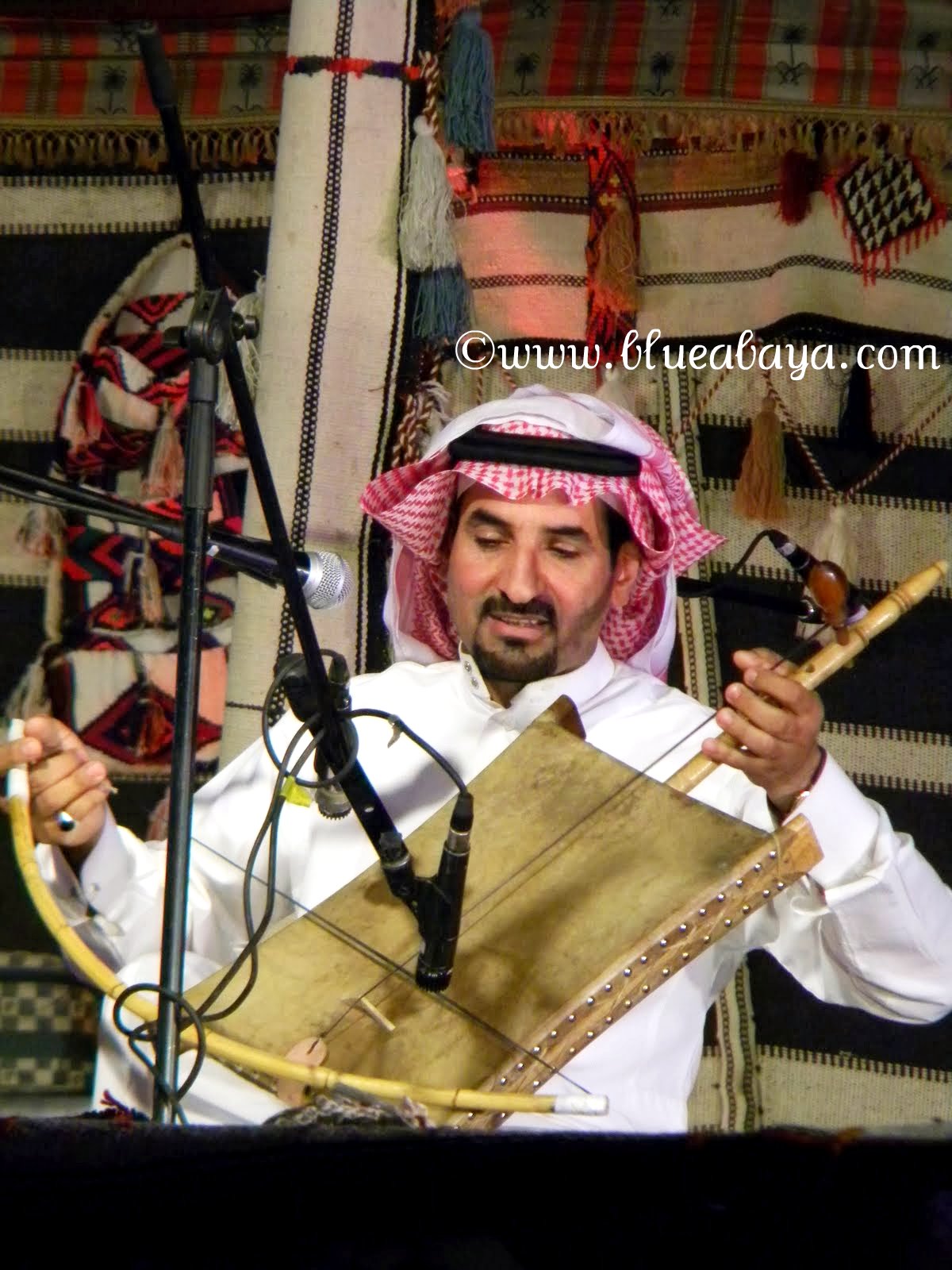
The folklore tent also has poetry recital and it's a great chance to listen to old Bedouin love songs played with the 'Desert Violin', the Rababah. 
For a bird's eye view of the festival area, and the best place to view the Eid fireworks show from, go up the water tower located inside the amusement park next to the National Museum!


Sunday, August 4, 2013

Top Ten Things To Do During Eid Al Fitr Holidays In Riyadh

UPDATE: Eid Al Fitr has been confirmed to begin on the 8th of August! Meaning, the Eid celebrations will be held on the first three days 8th, 9th and 10th of August!

My article from the Destination Riyadh Magazine August 2013 issue:
Top Ten Things To Do During Eid Al-Fitr Holidays In Riyadh

Eid Al-Fitr 2013 in Saudi Arabia is expected to begin on the 7th of August. Most companies and businesses in Riyadh will be closed for the first three days of the Eid celebrations. A few malls and restaurants remain open, but many a times Riyadhiens find themselves puzzled during this time, what is there to do in Riyadh during Eid?

Every year the Riyadh Municipality organizes various celebrations and festivals all around the city. There are events designed for families, for ladies only and for men only. Most of the festivities concentrate on celebrating the Saudi heritage with traditional dances, music, poetry, foods, displays by craftsmen and craftswomen, exhibitions portraying the Saudi culture and traditional handicraft markets.  For the full list of celebrations and locations, visit the Ar Riyadh website or look out for the Riyadh Municipality Eid Al Fitr newsletter which is distributed in the large shopping malls before Eid.
  1. Participate in the King Abdulaziz Historical Center celebrations. Every year the biggest and best celebrations are held in a vast area spreading around the Historical Center buildings and the National Museum. Traditional Sword (Aardha) dances, Najdi music, songs, and poetry recital fill the warm evenings and nights in a beautifully decorated setting. Enjoy a picnic in the National Museum Gardens watching the fountain and light show. Children will enjoy playing on the grass fields and running through the cooling fountains.
  2. Explore the Qasr Al Hokum  Square festival area surrounded by Saudi history. Highlights of this festival, situated next to the Al Musmak fort, include traditional folklore tents, handicrafts markets, Saudi food stalls and lots of activities and games for children. This area is usually separated for men and women.
  3. Watch the Eid fireworks show organized by the Riyadh Municipality. The fireworks will be held at 9pm on the first three days of Eid Al Fitr and launched from various areas around the city. The best places to view the fireworks from are the King Fahad football stadium, the suspension bridge and the water tower viewing platform, located next to the National Museum. UPDATE: This year 2012 the Riyadh Municipality has announced the fireworks show to begin at 11:50pm each of the three nights!
  4. Dine outside with views to both Mamlaka and Faisaliyah towers which will be specially lit for Eid. Café Lenotre and Lusin Armenian restaurant on Centria Mall’s third floor both offer family seating areas under  the stars and cooling mists. Reservations during the first days of Eid are an absolute must.
  5. Check out the spectacular views from the water tower viewing platform. The tower is located inside the small amusement park next to the National Museum. From up here you can and get a bird’s eye view down to the festival area, the beautifully lit mosques, historical buildings, festive lights and decorations of the area. Also one of the best places to watch the fireworks from.  Admission into the amusement park is 10 SAR and an additional 5 SAR to go up the tower. If you’re aiming to see the fireworks arrive at least half hour early. 
  6. Go to Wadi Hanifa dam in Historical Diriyah for a family BBQ .The area is dotted with picturesque picnic spots, each has a BBQ pit, seating areas and privacy. Adults can enjoy the breeze from the Wadi and views down to the valley while children can eat ice cream and play with the toys sold by vendors on site.
  7. Kindy Plaza Square inside the Diplomatic Quarters has one of the best organized and beautifully decorated festival areas. The square also has the best traditional dances from all around the Kingdom, dance groups from Najdi region, Eastern Province, Jazan and Madinah entertain family audiences for three nights in a row. There’s also a crafts market and Saudi traditional foods such as Marasi'a made on the spot by local women. On some years the Kindy plaza festivities have been cancelled last minute due to security concerns.

  8. Mingle with the local ladies at the Women’s festival building in the King Abdulaziz Historical Center. Mothers and daughters can have henna tattoos made, watch theatre and comedy shows, have face paintings made and the height of the evening a chance to watch Saudi women dancing and singing traditional Saudi songs.
  9. Men and children will enjoy the activities at the Show’s Square off exit 10 next to the AlSager Aviation Museum. This huge area has lots of motorsports and can be visited by the whole family. High Diving Show, motorcycle show, modified cars show, wall trampoline, flying trapeze, remote controlled cars shows and competitions.
  10. Take the family or a group of friends for a fun day out in Thumamah sand dunes. Choose from Quad bike rentals, camel rides, kite flying, horse back riding, or dune bashing and sand boarding. Rent an outdoor istiraha with a traditional Saudi tent and enjoy a meal by the camp fire or inside the air conditioned tents.


Wednesday, July 31, 2013

Ramadan And Over-Crowding Hospitals In Saudi-Arabia


The Holy month of Ramadan changes the daily rhythm drastically in Saudi hospitals. Basically the hospital, just like the rest of the Kingdom of Saudi Arabia, becomes alive at night and quiets down for the day during the Muslim fasting month. Read more here on how the Saudis usually visit the sick at hospitals. 
Needless to say the amount of visitors during Ramadan will at least double, especially during the last ten days. Visitors will come late and stay until early morning which is allowed because of the changed visiting hours. Visitors will bring along vast amounts of arabic foods to break the fast with like sambosa, all kinds of tiny pastries, cookies, dates, chocolates..

Large Saudi families come to the hospital to join in Iftar together with the sick family member.  It's not uncommon to find the entire family eating with their hands, on the bedsheets spread out on the floors! Saudis will generously give the nurses a taste of everything, sometimes offering huge trays full of different sweets or salty snacks.
Another peculiar thing that happens during Ramadan is handing out money to nurses. Patient or relatives might slip Riyals into the nurses pocket or openly offer money anywhere from 10 to 1000 riyals at a time. The gesture usually makes nurses feel somewhat awkward and because of cultural differences might be misinterpreted to be some form of bribing. Nurses are naturally not supposed to accept the money very few will reject it every time especially because the person offering the money will become very upset if rejected and they can be extremely pushy and just stuff the pockets with the money. The reason behind this is Saudis wanting to give 'charity' and do good deeds during Ramadan and the families wanting to show their gratitude and appreciation to the nurse.
Only a few patients will be observing the Ramadan fast, and if they do, they will also abstain from all medications including injections and intravenous drugs during daylight hours. That makes it a bit difficult to accommodate the medication regime to the fasting timetables. Basically it means that the medications normally given around 8-9 am will be given at fast breaking time around 6:30 -7 pm. The next dose will be at midnight and finally just before the morning prayer at 4 am. This can cause problems with the efficiency of treatments with antibiotics and pain killers.

For some patients it's fine to fast (health-wise) and it will not make their condition worse. Every once in a while there will be a patient who insists on fasting even if doing so will severely adversely affect their health. The patients don't want to miss out on the blessings of fasting. Some are diabetic which means their blood sugar levels will be uncontrolled and it might put the patient in risk of coma, or they will refuse insulin injections resulting in sky-high blood sugar levels. Patients with bowel problems might get complications like obstructed bowel, liver patients may suffer irreversible consequences that may even need surgery and then there is the odd patient who will even refuse to be operated on.

Toward the end of Ramadan the emergency room usually begins to fill with patients suffering from bowel obstructions, liver coma, severe dehydration and so on. Many are elderly patients needing full time hospital care meaning that the hospital will be full to its maximum capacity and often patients are left to wait for an available bed in the EMS. Patients suffering from gastrointestinal diseases and disorders, diabetes, metabolic disorders and other diet controlled conditions further crowd the ER beds making it the busiest time of the year in the hospital. Nurses and doctors are often exhausted from the workload this month brings along.
The Muslim medical personnel will often opt to work night shifts to make fasting easier or alternatively if they wish to work days they can work shorter hours. The total amount of working hours during this month for Muslim nurses, doctors and other muslim personnel is also cut down. Generally there will not be any operations other than the most urgent ones.

The patients' sitters will all usually be fasting and the hospital kitchen provides food for them as well as the fasting patients in the early morning hours. A three course 'breakfast meal' called sohoor will be distributed at 2 am well before the Fajr prayer.

The iftar meal, complete with dates, laban (buttermilk), soup, vegetables, rice and meat, dessert and juice will be distributed to the rooms at 6 pm. Even if a patient is not fasting, they will usually be up all night chatting with relatives, reading Quran or watching Arabic soap operas or the live televised show from the grand mosque in Mecca. This makes the night shifts exceptionally busy and hectic while the day shifts are slow paced and quiet.

I personally enjoy working during Ramadan, patients and relatives are in good spirits and it's nice to spend some extra time with them in the rooms having some arabic coffee and sweets. Generally the atmosphere is more laid-back and patients are not complaining as much as usual :)

P.S this post is a revised edition of a previous Blue Abaya article about Ramadan in Saudi hospitals from 2010.

Thursday, July 25, 2013

Quad Biking In Thumamah

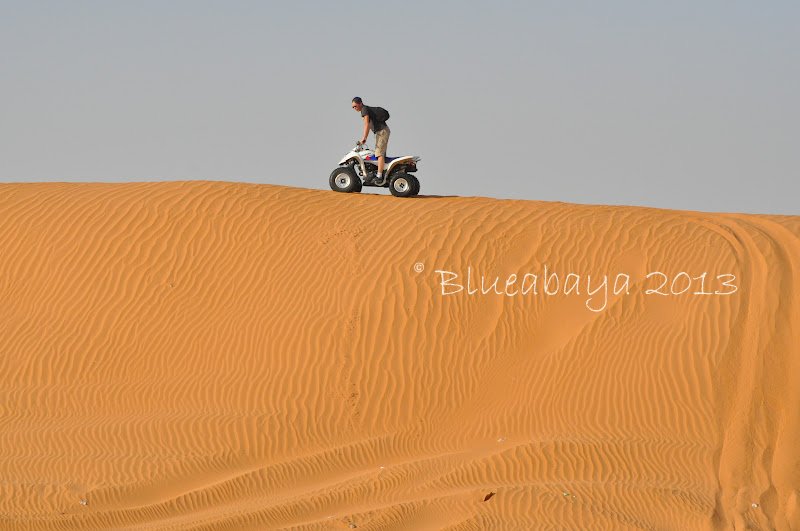
One of the most popular outdoors activities for locals and expats alike is going out to the nearby desert for some quad biking. Quads, four wheelers, sand buggies, whatever you call them, it's always a blast to drive them! The best thing is women can also drive, even in an all-women groups.

The Thumamah sand dunes outside Riyadh are a popular place for renting quads on the weekends. There's a stretch of over 20 km next to the highway lined with quad bike rental places. They also have Saudi style tents with their own private yards for rent which wuld be ideal for families. There's camel riding, horse back riding and other desert activities to enjoy.

The rental guys will be helpful in choosing the best bike and showing how it works. If they see a group of women going out on their own sometimes they might come with you some distance in case you get stuck and need pushing help.


To reach Thumamah drive out of Riyadh toward the Janadriyah festival area, you will pass it and the King's farm on the left hand side of the road. Continue on this road and you will soon see the sand dunes on the left of the road. The rental places are on the side of the road and they are easy to spot with the bikes lined in rows.
The further you drive out on this road, the better. There are literally hundreds of rental places here. The further out of town you drive the less people there will be around and the prices become cheaper. The sand dunes have less trash and there's not as much disturbance.

When you see a nice spot just make a turn left to the dunes and drive to whichever rental place you like. It might be worth shopping around a bit for a better price. If you go on weekdays during daytime there will most likely be nobody else around. On the other hand weekend afternoons and evenings turn this place crazy busy, dusty and crowded!

 Prices will range according to bike size from 100-300 SAR an hour. You can choose a bike with gears (recommended) or an automatic one. There are even very small bikes available for the children to try safely. You will need to get one of the larger size bikes to be able to climb the steeper hills and venture out to the dunes.
 Bashing in the soft sand is really fun but can also be tricky. You need to be careful watching out for sudden steep hills, thorny bushes, holes and large pieces of trash.
Sometimes a nuisance for the female bikers are the "shabab". These Saudi men are curious and persistent and will sometimes follow unaccompanied women around. To avoid this it's best to go during daytime and to places further out away from the crowds. It would be advisable to have a male accompany you during weekends and the peak hours. I've noticed that if these men keep bothering you, the best way to send them off is to start taking their picture.
Look out for falcons which can often be seen hunting in this area.
 Everyone gets stuck every once in a while! The trick is to avoid driving too slowly, especially when going uphill! Don't stop the bike uphill, only on a flat area or slightly downhill. If you get stuck get off of the bike and try pushing the bike out slowly while giving a little it gas.
 Women can remove their abaya out in the desert if they so wish and it's actually much safer to drive without it! The abayas hems that might get stuck in the wheels and engine. I've managed to ruin three abayas like this! If you keep it on, make sure your abaya doesn't get tangled and burned from the hot engine.
Unfortunately many areas of the beautiful Thumamah sands are ruined with trash left behind by bikers and campers. Don't leave any trash behind and pick up any that you can!!


Thursday, July 18, 2013

In Search Of The True Meaning Of Ramadan

Ramadan Mubarak to all Blue Abaya readers!
The following article was published in Saudi Gazette on Wednesday. I wrote the article because every year that I spend in Saudi Arabia during Ramadan, the more all the over consuming and madness is starting to bother me. The true, original meaning of Ramadan has been totally forgotten and it makes me feel really sad to see what is has become for some.

Most non-Muslims know this month as the time when Muslims abstain from food and drink during the daylight hours.  Before I came to KSA, admittedly, just like most non-Muslims living in western countries, I was pretty ignorant about Ramadan. I knew that this was the month when Muslims fasted from sunrise to sunset, but that was pretty much it. I had heard people saying 'them mohammedians' can eat only at night because Allah doesn't see in the dark or that Muslims need to fast only part of the day because they couldn't handle a week in row and other such nonsense. I remember wondering, what was the real reason behind the Muslim fast, but never bothered to find out the real answer. That is, until I came to the Magic Kingdom.

During my first Ramadan here I became very curious to find out more about this month as it all suddenly became much more of a reality to me. To my surprise, as Ramadan drew closer, my expat friends grew grumpier. "I hate Ramadan!" "Everything is closed, nobody is working" "Muslims skip work and leave all the work for us to do" "Whatever you do, don't stay in Saudi for Ramadan, it's just crazy" "they will arrest you if they see you drinking water during the day" etc etc etc. I did not hear a single positive comment about Ramadan. So naturally, I became somewhat weary of what Ramadan would bring along and started to dread the beginning of it along with all the other expats.

So Ramadan rolled along and the entire hospital turned upside down. Read here what Ramadan is like in a Saudi hospital. Patients ate at the strangest hours, visitors came and went in the middle of the night, Muslim working hours were cut, some Muslim employees would disappear in the middle of shifts, medicine regimes had to be changed and fasting patients could not even be administered intravenous medicines during daytime. It was all very confusing.

Despite all the weird schedule changes, I could not help noticing other changes too. There was a remarkable sense of unity, cheerfulness and a feeling of high spirits among my Muslim colleagues. The patients, if possible, became even more welcoming, friendly, and hospitable. There was a sense of elation in the air that I could not quite put my finger on, but it made me even more curious.

One day I watched all the ward clerks praying together with some nurses and doctors in the staff room where I was doing charting. I finally mustered up the confidence to ask about Ramadan, despite the fact that they were all Saudi males and I felt a little intimidated to approach them on this matter. I remember simply asking "why do you fast during Ramadan?"

I was blown away by the reply. Looking back, the way one of the men explained it to me in such a nice and respectable way was commendable, despite my seemingly super ignorant question.

He told me: "We fast to remember all those people who cannot eat and drink daily. We fast to feel their suffering, to remind ourselves of how blessed we are to have food and water. "

"We fast to feel those same pangs of hunger that our poor sisters and brothers feel daily around the world."

"We fast to become more generous, to practise self-discipline and to strive to become better Muslims and people."

His words had a profound impact on me. Somehow I had failed to see the true meaning of the fast. I started to look at it from an entirely different perspective.

I came to realize, that in reality, Ramadan is so much more than just abstaining from food and drink during the daylight hours. Basically, Muslims are supposed to abstain from all harmful acts as much as possible and concentrate on becoming a better person and Muslim. Everyone can set their own goals for Ramadan according to their life situation and abilities. While one person struggles to quit smoking, another might set as a goal to read the entire Quran during Ramadan. Some might plan to pray extra prayers every day, donate to charity or memorize a new Surah from the Quran.

So I learned from my Muslim colleagues that Ramadan is also about remembering our Creator, reading the Quran, which was sent down during the month of Ramadan, doing good deeds (out of a sincere wish to do them, not by habit or force), being kind to others, giving out Dawah (teaching, not preaching non-Muslims about Islam) and remembering the poor and the less fortunate. Ramadan is about being humble, modest and abstaining not only from food, but from extravagance, over-consuming, spending, wasting food, money and resources.

Sadly, what I see today is very disturbing in that many people in Saudi Arabia are doing the exact opposite. The true purpose has been long lost and forgotten. I see people stocking up on food and spending on groceries like crazy, cooking and baking like there is no tomorrow. Women are spending their days in the kitchen instead of focusing on their religion; some out of their own will or perhaps out of learned habit and routine, some by demands from husband and even peer pressure.

When time comes for iftar, people indulge in extravagant meals and then lay around all evening snacking on deep fried, highly sweetened and unhealthy foods, watching Arabic soap operas on TV, gossiping with friends and staying up all night. Many go to shopping malls which are now open until the early morning hours for mindless shopping. Some even force their kids to stay up late or wake them in the middle of the night so that the parents don't have to get up early with them! The next day they sleep until the evening until it all starts over again at sunset.

The Prophet Muhammed (pbuh) taught Muslims by example to break the fast with simply dates and water and eat a light meal later. Pray Tawareeh prayers, then go to sleep as one normally would, get up early for night prayers and suhoor (breakfast) and go about the day working and doing things that one would normally do.

Let's not forget the true meaning of Ramadan, its purpose, and all the blessings of this month.
Break those unhealthy and binding routines and habits.

Make your Ramadan beneficial, not superficial!


Friday, July 12, 2013

Blue Abaya Ramadan Giveaway!

I'm excited to announce some new developments for Blue Abaya! Some of you may have noticed that "Blue Abaya Photography" has opened a fan page on Facebook. Blue Abaya has also opened a store on Society6, a network where artists all over the world sell their artworks. Take advantage of the FREE Worldwide shipping PROMO exclusively for Blue Abaya Photography customers who order before July 14th midnight PST by clicking this link.


The Blue Abaya Photography store offers Saudi themed art prints, stretched canvas, iPad covers, laptop and iPad skins, throw pillows and stationery cards. These items will be the prizes for Blue Abaya's first ever giveaway!

To celebrate Ramadan, Blue Abaya wants to thank all the fans for the continuous support by offering you amazing prizes from the online store! These would be ideal as Eid gifts or Saudi themed souvenirs to take back home to your loved ones.

It's very simple and easy to participate in the giveaway with just a click of your mouse. Anyone in any country can participate. There are different ways available how to earn 'points' which each count as votes, which the Rafflecopter program will automatically draw a winner from after the giveaway ends July 20th.

The only obligatory step is to 'like' Blue Abaya Photography on Facebook. Do this by signing into your FB account and then just click 'like' on the giveaway box below. If you're already a fan on FB, just click on the "I'm a fan" option and you will be automatically added to the system. After doing this the program opens up the rest of the options!

You can tweet about the giveaway, pin it on Pinterest, or leave a blog post comment for example. You can share it everyday to earn more points, the more you have the better your chances to win!

a Rafflecopter giveaway


There are three different prizes up for grabs worth up to 120 USD. You can participate in each giveaway once daily. To view the different giveaways, click on the little arrow on the side of the image in the giveaway box to browse.

The prizes are a choice of iPhone cover by Blue Abaya Photography, check out all the available designs here. The covers fit iPhone 3G, 3GS, 4, 4S, 5, iPod touch and Samsung Galaxy S4.  Made of impact-resistant, flexible plastic hard case.
Here are some examples of the phone cases, there are over 20 designs to choose from in the store.


The second prize is an iPad cover of your choice from the Blue Abaya Photography line, check out all the available designs here. The iPad cover fits on iPad 2nd, 3rd, 4th Gen and iPad Mini.
These are some of the covers available in the store:


The third prize is a Throw Pillow size 16"x16" of your choice from the Blue Abaya Photography store. Check out all the designs by clicking this link.
Some of the pillow case designs: